22 February 2026
Keeping time at Milano-Cortina 2026
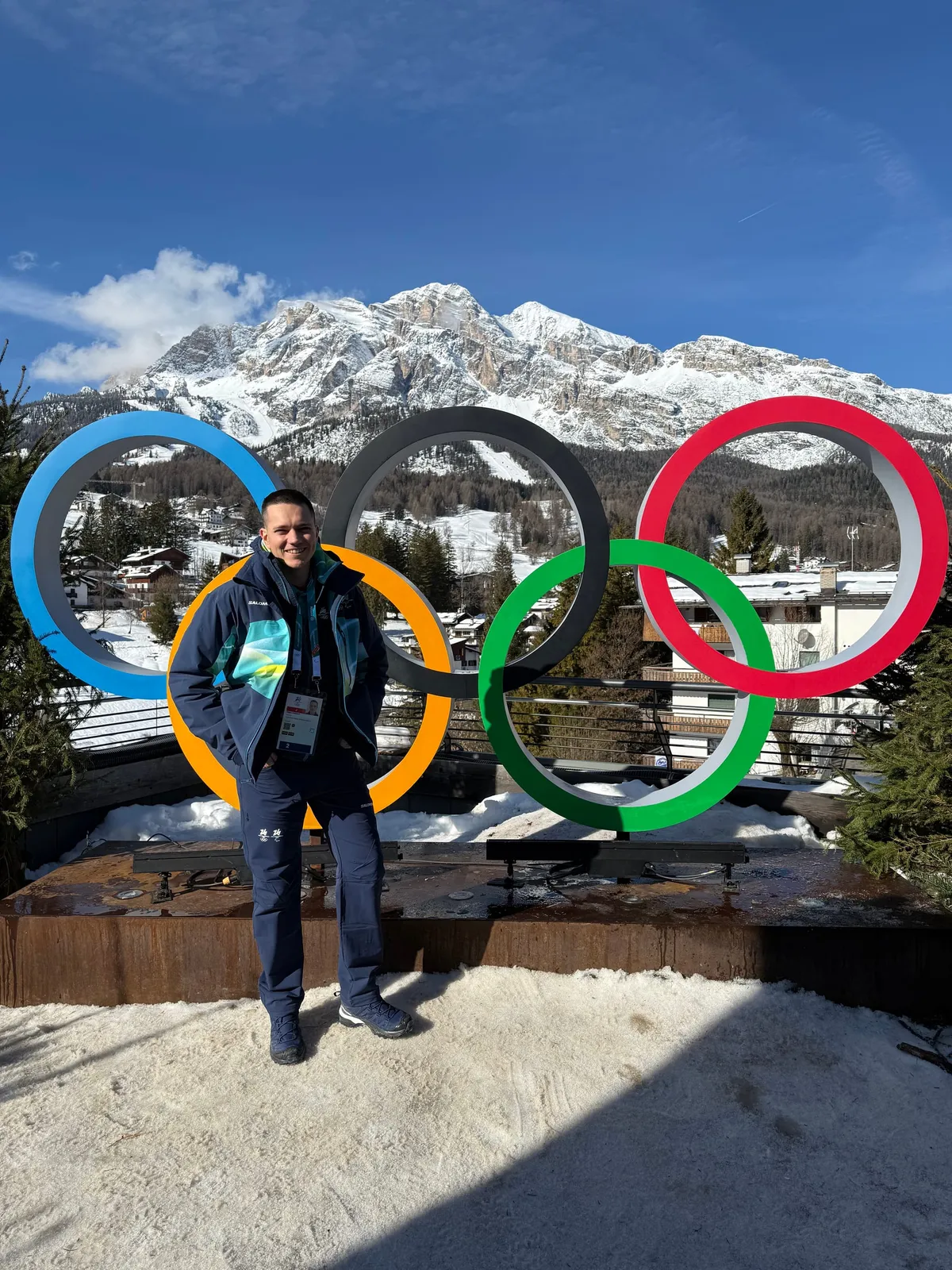
If you had told me a couple of years ago that my path would cross the Olympic Games, I would have guessed it involved a robot, a test bench, or, in my wildest dreams, a pair of goalkeeper gloves. Instead, it involved a stopwatch and a sheet of ice.
How it started: Turin 2025
In 2025 I joined the curling world as a Timer at the University Winter Games in Turin. The story that led me there is pretty simple. I was watching the Paris 2024 Olympic Games when I saw all the people wearing the same shirt behind the athletes: the Olympic volunteers! After that, something happened. I was on the metro in Turin when I saw a girl with a bag and a shirt that said “FISU World University Games”. I got home, searched on Google, and discovered this crazy world. My first reaction was: “Apply as a volunteer.” Once they reached out and I joined an interview for the role, they started asking me the usual stuff, until the big question: “Which sport do you prefer?” It was August, Turin was 40 degrees, I was sweating like crazy, and I was completely unprepared. I was thinking tennis, calcio, volleyball; nothing could have been further from the truth. I asked the interviewer, “Could you remind me which sports will be there?” “Of course, we have skiing…” My head blew up. It’s the f**king Winter Games, damn stupid guy! “…ice hockey, figure skating… and curling.” The lightbulb in my head went on. Who in their right mind would choose curling? “CURLING!” I said. She looked at me: “Oh, good. Do you play it?” I’m stopping here, because the rest is too much to say, but then she looked at me and asked if I was able to use a PC. With this beautiful interview and CV, they chose me as a curling volunteer. I was working on the day of the training session for the role, so I joined late. I discovered:
- Curling is an indoor sport, while other volunteers were in the middle of the mountains, freezing cold
- That edition was at PalaTazzoli in Turin, 10 minutes from my office
- Curling games are very long
- Curling has time…
There were a lot of roles I could do, from taking tickets at the entrance to cleaning the ice, but the tick on my CV saying “able to use a PC” enabled me to join the timers crew. The scene is fixed in my head. I arrived almost two hours later than expected, and there were about three or four older people trying to understand how to use the timing software (spoiler: it’s easy). The head of timers, Giorgia, looked at me and said, “You look young. Do you want to try?”. The rest is history. I did around 10 matches, taking only a few hours of permission from work. I was the timer for the mixed doubles semifinal (Italy lost there) and the bronze medal final. I was the only timer who had never played curling, and I was amazed. At the end, I asked, “Is there a possibility to do the Milano-Cortina Games?” and they told me something like, “It is difficult, but we will see.”
I walked in knowing curling the way most Italians do — as that hypnotic sport that appears on TV every four years — and walked out genuinely in love with it.
What surprised me most is that curling is a game made of time. Teams don’t just play ends; they spend a budget of thinking time, and someone has to run those clocks with total precision while the stones are sliding and the skips are shouting. That someone became me. It’s a role that rewards exactly the things I use at work every day: focus, calm under pressure, and an unhealthy affection for measuring things precisely.
How it continued: Cortina April 2025
In mid-March 2025, they called me: “Do you want to do the Junior World Games in Cortina? It’s the test event for the Olympics, Omega will be there, and you could be chosen for the 2026 Games.” It was 10 days in Cortina in April for the Junior Games. I kindly declined, and they told me this was the end of my Olympic journey.
But then, again, the lightbulb in my head thought better than me. “Could I come only for the weekend?” So I finished work on Friday at 5 p.m., rented a car, drove six hours to Cortina, slept in a house run by nuns (provided by the Games), and did six matches between Saturday morning and Monday morning. I finished on Monday morning at 10 a.m., because they lost really fast; then I jumped in the car, took work calls while driving, and was back in the office at 1 p.m., ready for lunch.
Then the call: the Olympics
And then, in August 2025, they made it official. “Omega approved you. You will be an Official timekeeper at the Milano-Cortina Olympic Games.”
February 2026 arrived. Writing that sentence still feels strange. The Games were at home, in Italy, and I got to be part of the machine that makes them run: one tiny, punctual gear in an enormous clockwork. The level is different in every way: the athletes, the crowd, the broadcast, the equipment for the volunteers, the judges. The pressure on them is pretty high, with the awareness that a clock error isn’t a quiet mistake but one with the whole world watching. Omega repeated it many times: you are on TV, and the clock is on the world feed. I did the timers for very important matches, I was there for the gold medal mixed double match and trust me, see with your eyes people won the most important medal in their sport, it’s an unbelievable experience!
The job itself is beautifully humble. Nobody notices the timekeeper when everything goes right, and that’s precisely the point. Fun fact: I got the first click wrong, adding five seconds to the home team. After that, the whole Olympics went fantastically. I worked a little bit too much in my real job, and I could have been more present. They gave me a house a little far away, so I had to use the public bus a lot, but I felt great and still cannot believe I was able to join the Olympic Games. I did the whole tournament. The transport and my arrival were also very funny, but I have already talked too much about it.
I also did the Paralympics: only five days, but full of emotion. We stayed in the Olympic Village and, trust me, they are superheroes. I saw them doing the impossible, and they really inspired me.
What AI said about it
From a science festival in Genoa to a driving simulator for a hospital to the Olympic ice: apparently, my career strategy is saying yes to interesting rooms and figuring out the rest once I’m inside.
A presto — and good curling. 🥌